Mały telewizor do kuchni na ścianę – ranking i porady
Kitchen chaos, recipe open on your phone, hands covered in flour and the only screen in the house belongs to someone else in the living room. A small TV mounted on the kitchen wall solves this instantly, but picking the wrong one means fighting glare while sautéing onions or squinting at tiny captions from across the room. The market is flooded with models that look tempting on paper yet crumble the moment you actually try to watch something while cooking. This guide cuts through the marketing noise and delivers the exact specs that matter in a real kitchen environment.
- Przekątna ekranu jaki rozmiar telewizora do kuchni wybrać
- Funkcje Smart TV w małym telewizorze kuchennym
- Złącza i porty w małym telewizorze do kuchni
- Montaż telewizora na ścianie w kuchni praktyczne wskazówki
- Mały telewizor do kuchni na ścianę Pytania i odpowiedzi
Przekątna ekranu jaki rozmiar telewizora do kuchni wybrać
Selecting the right screen size for a kitchen requires understanding how this room differs from a living room. Kitchen viewing is typically brief three to seven minutes per session and happens at varying angles while you're moving between stove, sink, and counter. This fundamentally changes what screen diagonal actually works. A 32-inch model dominates a 12-square-meter kitchen beautifully, while the same screen in a combined open-plan space gets lost against the backdrop. Measure your available wall space first, then subtract roughly 15 centimeters on each side for breathing room around the frame.
For kitchens under 10 square meters, a 19-to-24-inch display hits the sweet spot between visibility and proportionality. These models slip above a counter without overwhelming the backsplash, and their compact dimensions mean you won't sacrifice cabinet space or disrupt the visual flow of upper cabinets. The 24-inch variant particularly excels because it accommodates Full HD resolution without making individual pixels visually distinguishable the image remains crisp even when viewed from an angle during food preparation.
Kitchens between 10 and 18 square meters open the door to 28 and 32-inch screens. At these dimensions, the television becomes a genuine focal point rather than a utilitarian add-on. A 32-inch display lets you follow recipe video tutorials without leaning in, and the larger canvas handles weather widgets or news tickers that you can glance at while your hands are busy. The tradeoff is mounting height you'll need to position it higher to avoid neck strain, which means the screen should sit at approximately eye level when you're standing at the stove.
Resolution decisions deserve more attention than they typically receive. HD Ready (1366×768) remains perfectly acceptable for screens under 24 inches because the pixel density remains high enough that you won't notice individual dots from normal viewing distances. However, jumping to Full HD (1920×1080) provides meaningful improvement on 24-inch and larger panels, especially when displaying text from recipe apps or browsing streaming interfaces. The premium pricing for 4K in this size category rarely pays off content is rarely produced in true 4K for screens this small, and the visual difference at typical kitchen viewing distances proves negligible.
Matryca technology directly impacts how well the television performs under kitchen lighting conditions. IPS panels deliver viewing angles exceeding 178 degrees in both directions, meaning the screen remains accurate whether you're directly in front of it or glancing from the kitchen doorway. VA panels sacrifice some of this angle flexibility for deeper black levels, which benefits contrast but can make the image look washed out if you frequently watch from an offset position. Given that kitchen viewing rarely happens from a single fixed point, IPS technology typically wins in this specific application.
Kitchen environments introduce a unique challenge that most buyers overlook entirely: steam and grease. Nothing destroys a television faster than accumulated moisture behind the bezel or grease film on the panel surface. While no consumer television carries full waterproofing, selecting a model with sealed rear ventilation and easy-to-clean surfaces extends operational lifespan significantly. Avoid models with fabric speaker grilles in the front bezel these trap odors and prove nearly impossible to de-grease without disassembly.
Funkcje Smart TV w małym telewizorze kuchennym
Built-in intelligence transforms a kitchen display from a passive receiver into a versatile entertainment hub. The core Smart TV functionality revolves around Wi-Fi connectivity operating on both 2.4GHz and 5GHz bands. Dual-band support matters because kitchen environments often contain multiple connected devices competing for bandwidth on the 2.4GHz spectrum using the cleaner 5GHz channel prevents buffering when streaming cooking tutorials while someone else streams music in the adjacent room.
Operating system selection dramatically shapes the day-to-day experience. WebOS offers arguably the smoothest interface for casual navigation with a logical card-based layout that your fingers find intuitive on a remote. Tizen provides deeper integration with Samsung ecosystem devices if you already own Galaxy phones or Samsung appliances. Android TV delivers the broadest app library including niche streaming services, though the interface occasionally feels less refined than proprietary alternatives. Regardless of platform, verify that your preferred streaming applications receive regular updates a television running outdated software becomes frustrating within two to three years.
Application availability for a kitchen television focuses on different priorities than living room use. Recipe platforms like YouTube and streaming services dominate usage, but weather applications and countdown timers prove unexpectedly valuable. Before purchasing, confirm that the television's app store includes the specific services you use most frequently. Some budget models ship with severely limited application ecosystems that may not support newer streaming platforms entering the market.
Voice control integration represents the single most convenient Smart TV feature for kitchen environments. Controlling playback without touching the remote while your hands are covered in dough or chopping vegetables transforms the experience entirely. Compatibility with popular voice assistants lets you launch specific applications, adjust volume, or search for recipes entirely through spoken commands. This functionality works through either built-in microphones in the remote or integration with separate smart speakers already present in your home.
Mobile application control extends Smart TV functionality further. Installing the manufacturer's companion app on your smartphone transforms your phone into a sophisticated remote with a full keyboard for searching content far more practical than navigating on-screen keyboards with a traditional remote. The best companion apps also support sending content from your phone directly to the television, letting you share recipe videos or cooking demonstration clips with a single tap.
Screen mirroring and casting capabilities deserve attention for households with diverse device ecosystems. AirPlay support lets iPhone and iPad users stream content effortlessly, while Chromecast integration accomplishes the same for Android devices and Chrome browsers. The specific protocol matters less than ensuring your household devices can connect without purchasing additional hardware. Some models also support Bluetooth connectivity for connecting wireless headphones valuable when someone wants to watch late-night programs without disturbing sleeping family members.
Złącza i porty w małym telewizorze do kuchni
Physical connectivity determines what devices you can attach and how future-proof your purchase remains. The HDMI complement deserves particular scrutiny because these ports handle everything from streaming sticks to gaming consoles to soundbars. Minimum acceptable configuration includes two HDMI inputs one for a streaming device and one for an alternative source. Some models include HDMI with ARC functionality, which simplifies audio routing to external sound systems through a single cable carrying both video and audio signals.
USB ports serve multiple practical purposes in kitchen scenarios. A flash drive filled with downloaded recipe videos plays directly without needing any other hardware. External hard drives with media libraries become accessible for background entertainment during longer cooking projects. The USB connection also typically provides enough power to operate streaming sticks, eliminating a separate power adapter and keeping the installation cleaner. Prioritize models offering USB 3.0 ports for faster media scanning and more reliable playback of high-bitrate video content.
Bluetooth functionality opens wireless possibilities that physical cables cannot match. Connecting a soundbar or portable speaker without running cables across your kitchen works beautifully when the television includes Bluetooth audio transmission. This proves especially valuable in rental properties where running new cables through walls isn't possible. Bluetooth also enables wireless keyboard and mouse connections if you want to use the television for browsing rather than passive viewing.
Wejście antenowe remains essential despite the streaming-first nature of modern television. Local broadcast television, even in major cities, provides valuable redundancy when internet connectivity fails. Polish DVB-T2 signal compatibility matters for accessing the new generation of digital terrestrial broadcasting that replaced the older MUX transmissions. Verify that any model you consider supports DVB-T2/HEVC decoding this ensures compatibility with current Polish broadcast standards without requiring external set-top boxes.
Common Interface slot supports pay-TV subscriptions through inserted CAM modules, though this feature sees limited kitchen use. The analog AV input (RCA or composite) has largely disappeared from newer models, but verify its presence if you own legacy equipment. Ethernet connectivity via RJ45 port provides a wired alternative to Wi-Fi valuable if your kitchen sits at the edge of your wireless coverage range or if you prioritize maximum streaming stability over convenience.
Speaker configuration influences whether you'll need additional audio equipment. Most small televisions ship with dual 5-watt drivers that produce acceptable but not impressive sound. The acoustic challenge in kitchens involves competing with range hood noise and conversation, which often renders built-in speakers inadequate for comfortable listening. Consider models offering at least 10 watts per channel and built-in audio processing that enhances dialogue clarity. If the television will serve as your primary audio source, budget for a compact soundbar to accompany it.
Montaż telewizora na ścianie w kuchni praktyczne wskazówki
Selecting the appropriate uchwyt ścienny determines both and viewing comfort. Standard VESA measurement indicates the distance between mounting holes on the television's rear panel. Most small televisions follow VESA 75×75 or VESA 100×100 patterns, though some ultra-compact models use non-standard measurements that limit bracket compatibility. Verify the VESA specification before purchasing any mounting solution mismatched components create dangerous installations.
Uchwyt ścienny types range from fixed models offering the thinnest profile to fully articulating arms enabling dramatic angle adjustment. Fixed brackets work excellently in kitchens where viewing positions remain relatively consistent. Tilting mounts prove valuable when the television sits above counter height, letting you angle the screen downward to reduce glare from overhead lighting. Full-motion arms suit irregular kitchen layouts where you might want to watch from different positions, though they require more wall space and add complexity to the installation.
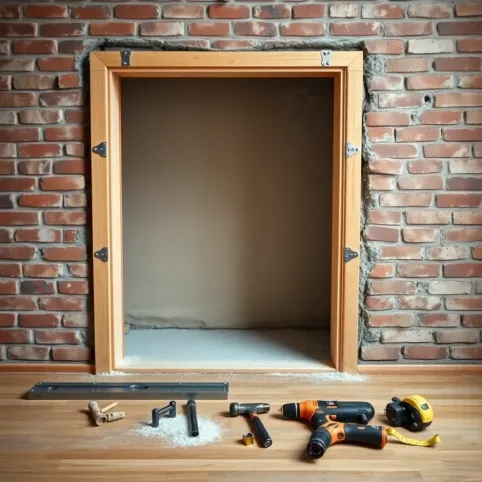
Ściana material dictates appropriate mounting hardware. Standard drywall on wood studs accepts lag bolts directly into the studs for secure installations. Drywall alone requires toggle bolts rated for at least 25 kilograms per anchor to support the television safely. Concrete and brick walls accept masonry anchors or construction adhesive specifically formulated for television installations. Whatever your wall material, always test the mount's stability by applying firm pressure before trusting it with your expensive electronics.
Ukrycie przewodów transforms a potentially messy installation into a clean, professional result. Surface-mounted cable channels paint-matched to your wall color route power and signal cables invisibly along the wall surface. Recessed installation requires cutting into the wall to route cables through channels, which proves more aesthetically pleasing but demands patching and painting afterwards. For rental properties, adhesive-backed channels provide damage-free cable management that removes cleanly when you move out.
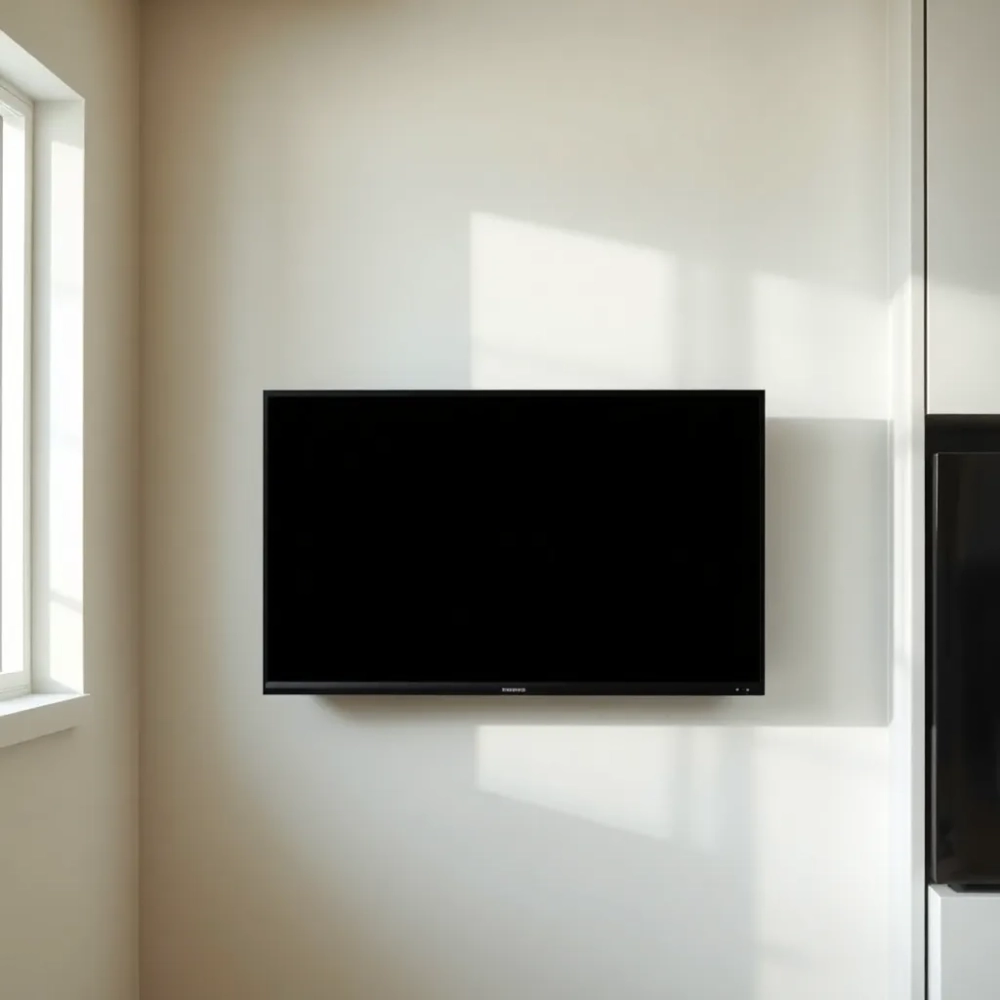
Wysokość montażu follows specific guidelines that balance neck comfort with practical visibility. Standard living room mounting places screens at approximately 120 centimeters from floor to center for seated viewing, but kitchen installations typically serve standing viewers. Aim for the screen's center to sit at 150-170 centimeters from the floor, which positions it comfortably in peripheral vision without requiring head tilting. The television should sit high enough to avoid steam and grease exposure from stovetop cooking while remaining accessible for remote operation.
Accessibility considerations influence long-term satisfaction significantly. The television needs enough clearance for cable connections at least 10 centimeters between the wall and the television's rear panel at the connection side. Some models include removable panels that improve access to ports, which proves invaluable when you need to swap HDMI devices. Consider the weight distribution if mounting above upper cabinets models exceeding 5 kilograms risk tipping forward if accessed carelessly from a step stool.
Mały telewizor do kuchni na ścianę Pytania i odpowiedzi
Jaka optymalna przekątna ekranu jest zalecana dla małego telewizora do kuchni?
Zalecana przekątna wynosi od 19 do 32 cali. Dla typowej kuchni 19-24 cale wystarczają, natomiast w większych przestrzeniach warto rozważyć 32‑calowy model.
Jakie parametry obrazu (rozdzielczość, typ matrycy) najlepiej sprawdzają się w warunkach kuchennych?
W zupełności wystarcza rozdzielczość HD Ready lub Full HD. Matryca IPS zapewnia szerokie kąty widzenia, co jest przydatne, gdy ekran oglądasz z różnych miejsc w kuchni. Ewentualnie można wybrać VA, jeśli priorytetem jest głębszy kontrast.
Na co zwrócić uwagę przy wyborze uchwytu ściennego i standardu VESA?
Upewnij się, że uchwyt obsługuje standard VESA odpowiadający rozmiarowi telewizora (np. 75×75 mm, 100×100 mm). Uchwyt powinien umożliwiać regulację kąta nachylenia, aby obraz był czytelny podczas gotowania. Dodatkowo warto wybrać model z możliwością ukrycia przewodów.
Czy mały telewizor do kuchni powinien mieć funkcje Smart TV i jakie złącza są niezbędne?
Wbudowane Wi‑Fi i system operacyjny (np. Tizen, webOS) pozwalają na korzystanie z aplikacji VOD bez dodatkowych urządzeń. Ważne złącza to HDMI (przynajmniej jedno), USB do odtwarzania multimediów, Bluetooth do podłączenia słuchawek lub głośnika oraz wejście antenowe.
Jak zadbać o odporność na wilgoć i łatwość czyszczenia telewizora w kuchni?
Poszukaj modeli z certyfikatem IP lub specjalną powłoką anty‑wilgociową. Regularnie przecieraj ekran miękką ściereczką nasączoną delikatnym detergentem. Unikaj bezpośredniego kontaktu z strumieniem pary, instalując telewizor z dala od kuchenki.
Jakie są rekomendowane modele małych telewizorów do montażu na ścianie w kuchni?
Do popularnych propozycji należą: Samsung The Frame 24 cala, LG 24TL520S, Philips 24PFS5603 oraz Sony X80J 32 cale. Każdy z nich oferuje kompaktowy profil, wbudowane funkcje Smart TV oraz różne opcje mocowania VESA.